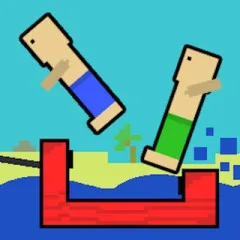
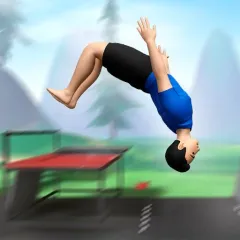
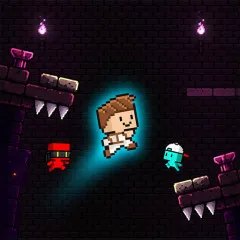
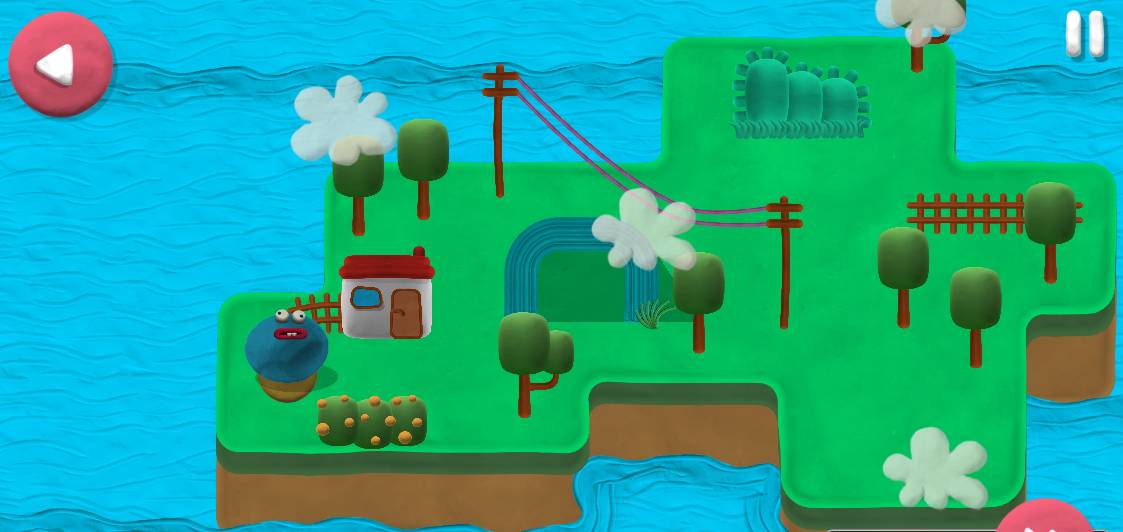
Eugene's Life is a physics platformer where an elastic clay hero bounces and squeezes through a plasticine world, solving mechanical puzzles to reach each final flag.
Learning the Controls in Eugene's Life
Every level ends at a flag, and the route there depends on how you use your size. Movement itself takes seconds to learn.
| Key | Action |
|---|
| A or Left Arrow | Move left |
| D or Right Arrow | Move right |
| W or Up Arrow | Inflate your body |
| S or Down Arrow | Descend |
What Makes It Stand Out
- The body is the main tool. Inflating adds bounce, while staying compact lets you pass gaps that block a larger shape.
- Springs, levers, and machines work as a team, so one switch often changes what the next section demands.
- Plasticine scenery gives every stage a handmade texture that is pleasant to read at a glance.
- Many puzzles allow more than one route, which rewards players who test their own ideas.
- Difficulty grows as mechanisms combine, not through sudden spikes.
Practical Advice for Smoother Runs
- Study the route before you move. Follow the path from the start to the flag and note every spring, lever, and gap. Knowing the order of obstacles saves many retries.
- Time your inflation. Pressing W a moment before you touch a spring adds height to the launch, while pressing it too early wastes the bounce.
- Shrink before narrow openings. Changing size halfway through a passage often leaves you stuck, so adjust at the entrance.
- Land with the Down key. Holding S while falling slows the drop and gives you room to steer away from hazards.
- Carry speed into jumps. Run toward an edge and inflate right at the lip so your momentum travels with you.
- Test one mechanism at a time. Pull a lever, watch what moves, and only then commit to a plan.
- Adjust by small amounts. After a failed attempt, shift your timing slightly instead of rebuilding the whole approach.
More Platformer Games You Will Love
Questions Players Often Ask
Is Eugene's Life difficult to pick up?
Not really. Three actions cover everything, though good timing takes practice.
What does the S key do?
It lowers your body and controls how fast you fall.
Can one puzzle have several solutions?
Often yes. Size and timing leave plenty of room to experiment.
Final Thoughts
Eugene's Life takes one simple idea, a body that stretches, and builds a full set of physical puzzles around it. Clear controls, a tactile look, and inventive machines make each flag feel earned. Anyone who enjoys testing ideas and learning from small failures will find a lot to like.